To maintain clarity and concision, this page does not include exhaustive, beat-by-beat breakdowns (such as mapping specific instruments or phrases to individual narrative beats).
Instead, it presents a high-level overview of my music design approach, along with selected highlights that illustrate key design decisions.
Case I
Hero Theme Music Design
This case builds upon the established musical direction of the IP defined by the team prior to my involvement. My contribution focused on applying this direction to a specific narrative case, translating story beats and character relationships into concrete music design decisions while maintaining stylistic consistency with the overall IP.
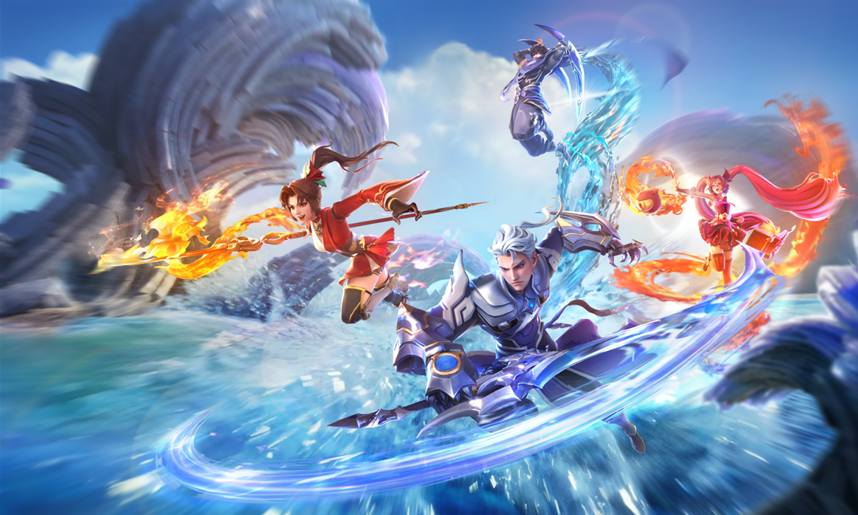
Narrative & Character Framework
Two protagonists are defined through contrasting yet complementary musical identities:
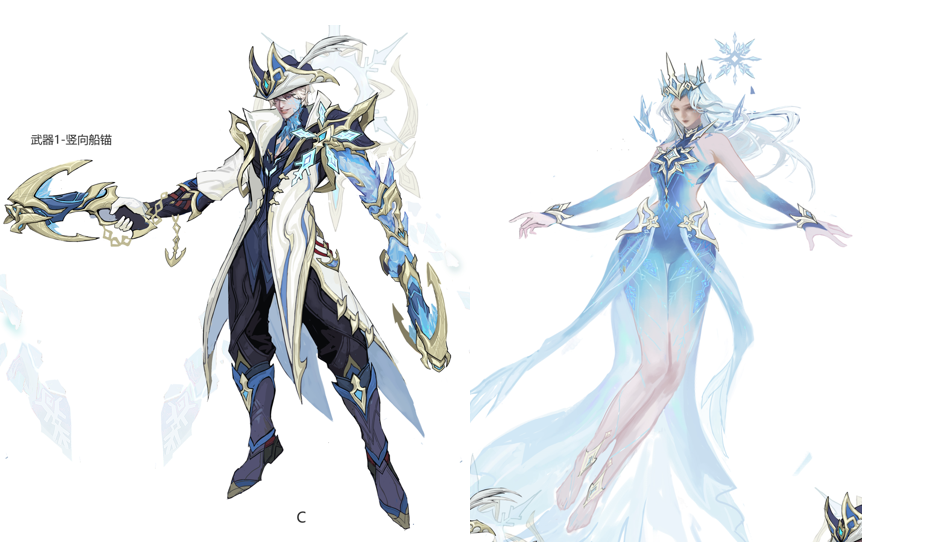
Male Character: Pirate captain archetype with a heroic presence and subtle sci-fi undertones.
Female Character: Pure, gentle, nurturing, and redeeming in emotional tone.
A key narrative moment occurs when, in a moment of crisis, the two characters merge into one. The backstory unfolds organically, with the music evolving alongside the emotional shifts. This narrative arc guided the thematic development and emotional contour of the music.
Music Design Process
Step 0 – Narrative-Driven Emotional Mapping for Composition Alignment
For this narrative-focused case, interactive looping is not required. Instead of segmenting music into gameplay states, I begin by mapping the emotional progression of the story over time to establish a clear emotional arc for the composition.
Using an emotion–time curve (Y-axis: emotional intensity, X-axis: time), I outline key narrative beats and emotional shifts to define the overall pacing and dramatic contour of the music. This emotional mapping serves as the foundation for subsequent motif development, harmonic direction, and orchestration decisions.
By aligning the emotional arc upfront, this approach provides composers with a clear narrative framework to work within, enabling focused creative development while ensuring consistency between musical expression and story progression.
Step 1 – Instrumentation Balance
I first define the acoustic–electronic ratio to support both the cinematic scope and the modern appeal of the IP. Orchestral elements provide emotional weight and heroism, while electronic layers reinforce the sci-fi tone and contemporary identity.
Step 2 – Storytelling Through Music
Musical structure and dynamics are aligned with character relationships and emotional progression. As the narrative intensifies, harmonic density and textural layering increase to mirror emotional escalation and character convergence.
Step 3 – Motif Design
Each character is assigned a distinct motif that reflects their personality and narrative role. These motifs are designed to be combinable, allowing thematic fusion during the pivotal story moment where the two characters become one.
Step 4 – Signature Instruments
Specific instruments and timbral choices are assigned to each character to function as their musical identity. This “specific instruments for specific characters” approach helps maintain clarity and recognizability across narrative and gameplay contexts.
Video with Edited Reference Music
This video primarily communicates the overall emotional arc, the tonal mode and emotional qualities of representative character motifs, and the listening feel of each character’s signature instrument.
While the video effectively conveys emotional progression and stylistic direction, it does not aim to define precise orchestration ratios or detailed instrumentation. To complement this, I provided additional music references alongside the written brief, ensuring that the intended acoustic instrument timbres and electronic textures were communicated as clearly as possible.
Through precise editing and matching, I aligned musical structure with visual rhythm and narrative pacing, enabling composers to quickly grasp the creative goals and emotional targets of the scene.
Rather than prescribing specific compositions, this approach establishes a shared creative framework, allowing composers to freely interpret and develop original music within the defined stylistic and emotional direction.
Case II
Adaptive Exploration / Combat & Boss Themes
This case builds upon an established musical framework for the IP defined prior to my involvement. It explores how music design can reinforce faction identity and gameplay states (exploration, combat, and boss encounters), within a grand orchestral sci-fi direction blended with modern, near-future elements.
As this music is designed for narrative-driven map environments, it is structured to support story progression, respond to gameplay state changes, and scale in intensity to reflect in-game difficulty. Each section is composed to loop seamlessly, while transitions between stages are designed to be smooth and context-sensitive, enabling fluid musical shifts in response to combat encounters or narrative developments.
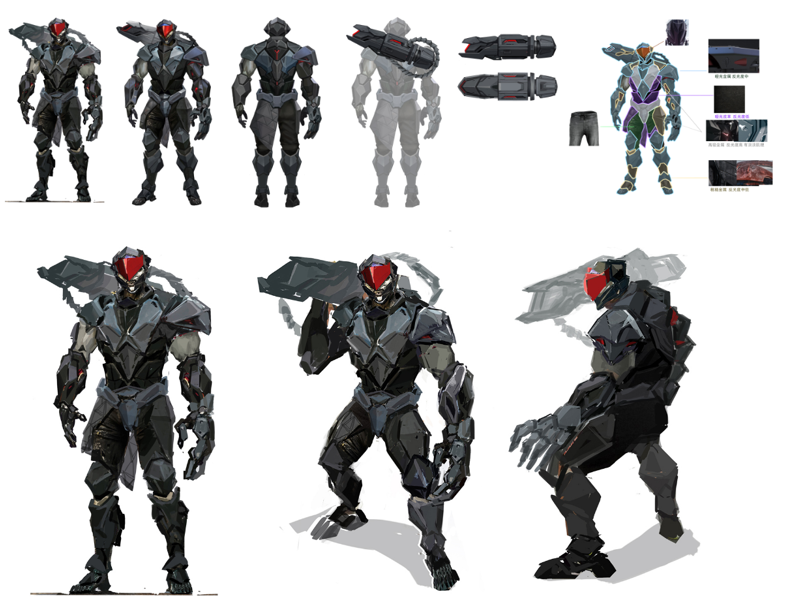
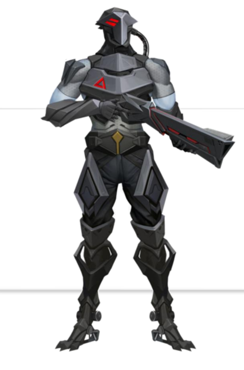
Faction & Boss Identity
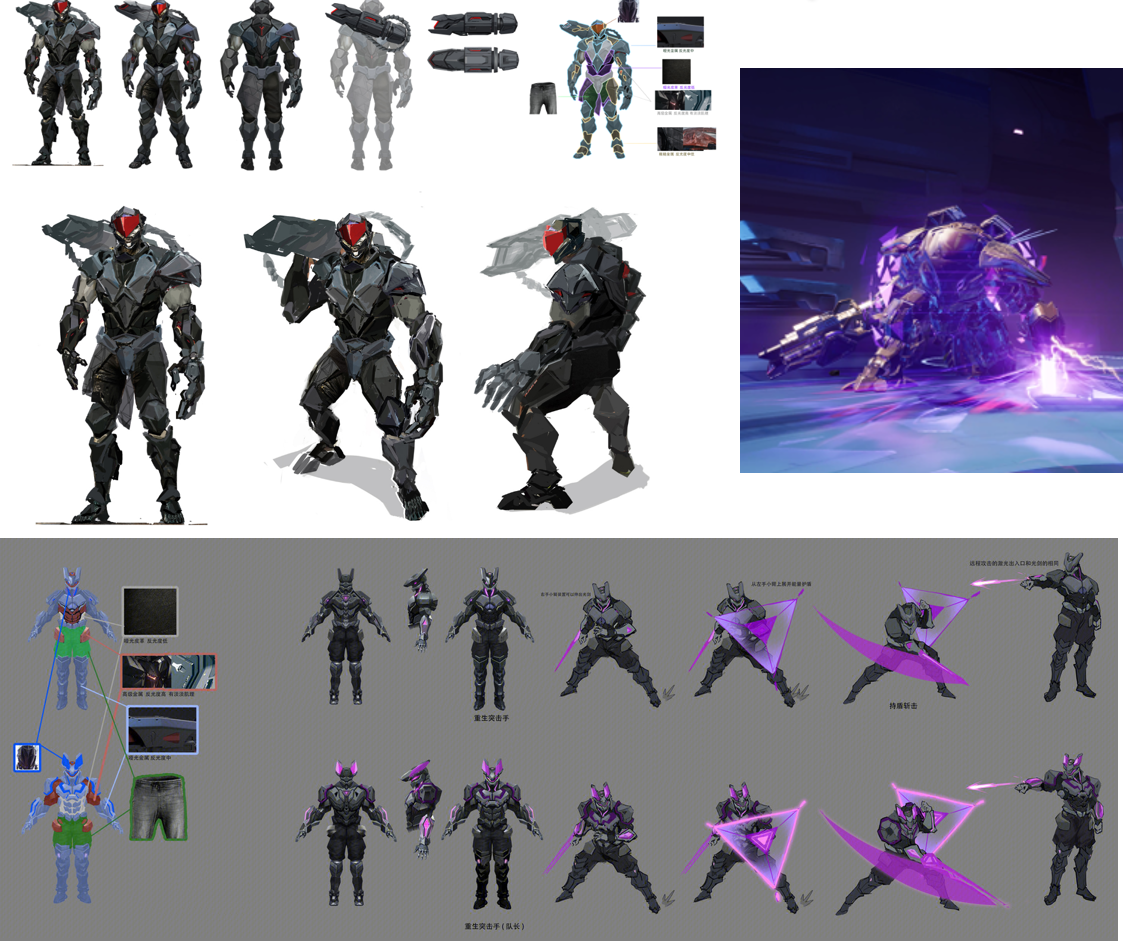
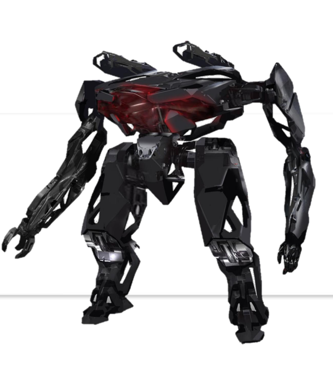
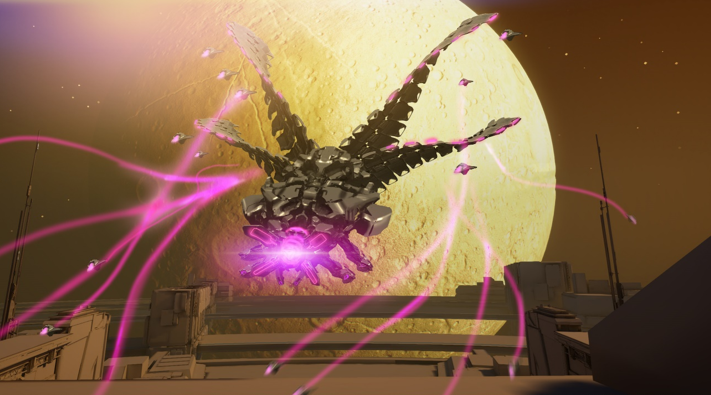
Two primary enemy factions / bosses are differentiated through musical traits:
Company Faction: Dangerous, high-tech, mechanical
MoXiao (Robot Octopus Boss): Lethal, high-tech, with an organic “Xiao” (Octopus) identity
Narrative Anchor: “Dr. Z” is the boss of this faction
These identities informed the tonal palette, rhythmic density, and sound design approach for each faction and encounter type.
Music Design Process
Step 0 - Structural Planning for Interactive Music & Composition Alignment
Before moving into detailed music design, I first define the high-level musical structure for each gameplay context to establish a shared structural and emotional framework with composers.
For example, the exploration/combat map music is structured as:
Intro – Ambience – Stinger – Normal Enemy Combat – Stinger – Elite Enemy Combat – Stinger – Ambience – Outro,
while the boss music follows a multi-phase structure:
Intro – Stinger – Boss Combat Phase 1 – Stinger – Boss Combat Phase 2 – Stinger – Boss Combat Phase 3 – Stinger – Outro.
These structures are further communicated through an intensity–time curve (Y-axis: intensity, X-axis: time), annotated with the corresponding structural stages. This approach helps align pacing, emotional progression, and gameplay-driven intensity at an early stage of collaboration.
By establishing the musical structure upfront and visualizing the intended dynamic contour, composers can quickly grasp the design intent and focus their creative efforts within a clear framework. This method improves communication efficiency, preserves creative freedom in composition, and reduces unnecessary iteration during early alignment.
Step 1 – Instrumentation & Texture Ratios
Music for exploration, combat, and boss fights is designed using an orchestral/electronic/sound design blend. The goal is to achieve a distinctly electronic feel without leaning into EDM conventions, maintaining a cinematic sci-fi tone appropriate for the game’s setting.
Step 2 – Signature Sound & Timbre
A shared high-tech and dangerous timbral palette is developed for all enemy factions to maintain cohesion.
For Robot Octopus Boss, a unique timbre is introduced to emphasize its biological–mechanical hybrid identity and distinguish boss encounters from standard combat scenarios.
Step 3 – Special Design & Easter Eggs
Company Faction: Rhythmic patterns and melodic structures are generated using the binary representation of the uppercase letter “Z” (1011010), reinforcing the narrative presence of Dr. Z through embedded musical logic.
Robot Octopus Boss: A classic motif from an older IP (“Assault Fire”) is incorporated as a hidden musical reference, serving as an easter egg for legacy players.
Gameplay Integration
Exploration, combat, and boss fight music are designed as interconnected layers and states, allowing for smooth transitions based on gameplay intensity. Combat music increases rhythmic density and percussive energy, while boss fight music introduces expanded orchestration and signature timbres to heighten perceived threat and narrative significance.
Interactive Music Design Showcase